
Timing
Two clocks, and they do not run at the same speed
The day an item is checked into the warehouse, two counters start. One is long: the storage countdown shown against every row on the warehouse page. One is short: the window in which a return or exchange can still be requested. People plan hauls around the long one and get caught by the short one.
Both start on arrival. Neither waits for the rest of your haul, and neither pauses because a seller is slow. That is the whole timing problem in two sentences.
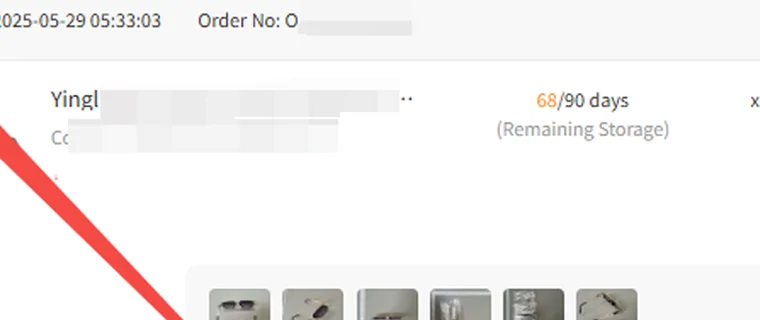
What the warehouse page actually tells you
Each row carries the quantity, the weight, a goods type tag, the quality photos taken on arrival, and a remaining storage figure. In the operator's own tutorial capture, those figures read as a count of days out of ninety, with the number falling as the item waits (checked 4 August 2026).
We are quoting the screenshot rather than a policy page here, and the distinction matters: what your account shows is the number that governs your items. Check it rather than trusting any figure written in a guide, this one included.

Every deadline in one place
Five windows, with what starts them and what happens when they close. The first two run while your items are still in China. The last three run after the parcel has been delivered.
| Window | Starts when | What it is for | When it closes |
|---|---|---|---|
| Return or exchange | The order shows as stored in the warehouse | Sending an item back to the seller before it ships | The operator states five days, or 120 hours, and says later requests are not accepted |
| Storage | The item is checked in | Holding the item while the rest of the haul arrives | The countdown shown on your warehouse row runs out |
| Check at the door | The courier hands the parcel over | Noting visible damage or refusing the parcel | The moment you sign for it normally |
| Damage evidence | You signed without checking | Sending photos, the invoice and the packaging as evidence | Two working days |
| Anything else about the parcel | Delivery | Raising a problem with customer service | 72 hours after signing, and the operator may decline after seven days from the delivery record |
Windows quoted from the OrientDig returns article, sign off notices and after sales considerations, plus the storage counter visible in the official tutorial screenshot (checked 4 August 2026).
A plan that works
How to decide the day to submit
Four checks, in order. It takes a couple of minutes and it is the difference between a haul that ships on your terms and one that ships because a counter ran out.
Find the oldest item in the warehouse
Sort by what arrived first. Its remaining storage figure, not the average, is your real deadline.
Ask what you are still waiting for
If the missing item has not been bought yet, it is not part of this parcel. A haul that waits for a purchase you have not made is not a plan.
Check anything you might return
The return window is measured in days, not weeks. If something looked wrong in the arrival photos, deal with it before you think about freight.
Submit while you still have room to react
Leaving a few days of margin means a route restriction or a payment problem does not turn into an expiry. Submitting on the last day removes every option you might need.
Where waiting helps and where it stops helping
Patience is genuinely profitable in a haul, right up to the point where it is not.
Waiting is earning you something
- another ordered item is in transit to the warehouse
- you are inside a weight step and one more small thing rides free
- a return you already requested is still being resolved
Waiting is now costing you
- the oldest item is close to the end of its countdown
- you are waiting on a decision rather than on a delivery
- the item you are waiting for has a minimum order you have not accepted yet
- the return window on something questionable is nearly closed
After the box leaves
Once a parcel is dispatched you can follow it from the parcel list in your account, which groups shipments by status and offers an invoice download. The operator is explicit that international shipping carries risks it does not control, naming delays, confiscation, taxes, damage and missing packages, and says it will inform you about the situation for your country and help where it can (checked 4 August 2026).
That is a fair description of what any agent can promise. It is also the reason the decisions worth caring about all happen before submission, while they are still yours to make.
