The agent
OrientDig, seen from the warehouse end
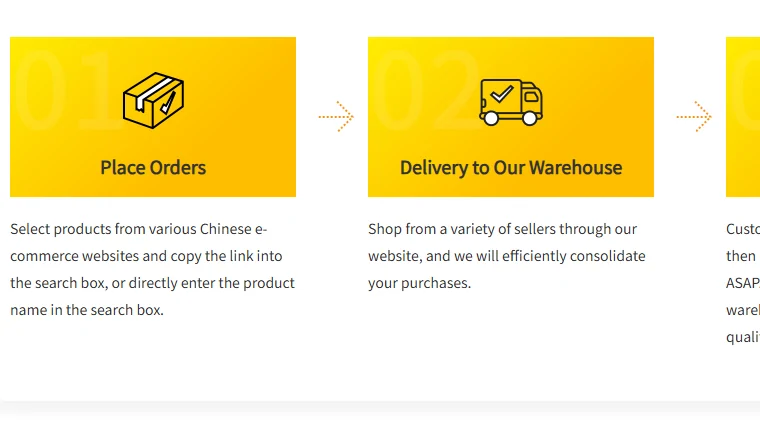
OrientDig is a shopping agent. Most sellers on Chinese marketplaces deliver inside China only, so somebody with a Chinese account and a Chinese address has to stand in the middle: buy the item, take delivery of it, check it, hold it, and then send it abroad. OrientDig is that middle party, and its own tutorial sets the job out in ten numbered steps.
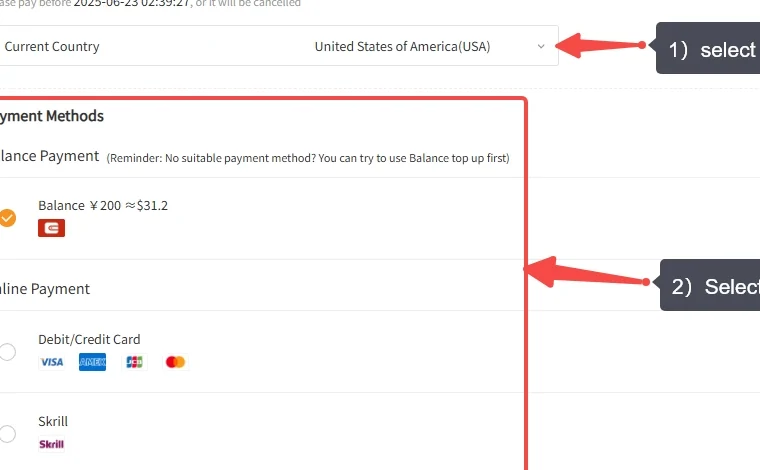
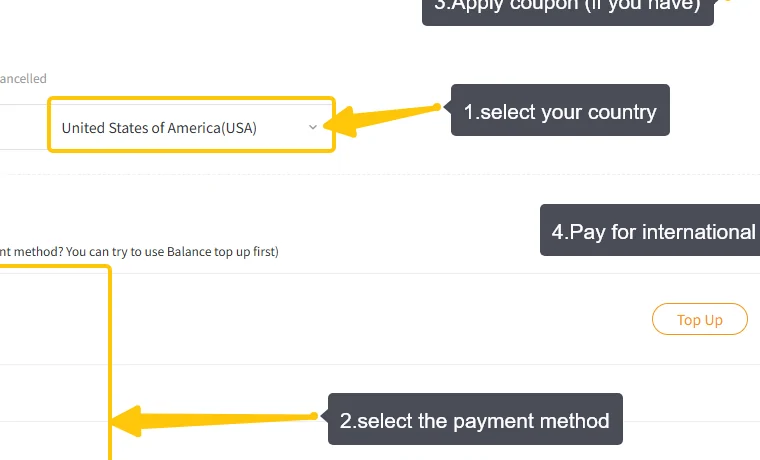
Two of those steps carry money directly. You pay first for the goods plus the seller delivery inside China. Later, when you submit a parcel, you pay a deposit on international freight. The operator states that the service itself is free of charge for orders from common platforms, that the total is made up of the item, the international shipping and customs charges, and that customs declaration is typically a small fixed amount per parcel (checked 4 August 2026).
Between those two payments the item sits in a warehouse. That gap is the reason this site exists.
Where the items come from
The official guidance names Taobao, Tmall, 1688 and Weidian as the marketplaces you can paste a link from. Anything on a platform outside that list, and the tutorial gives Xianyu, Pinduoduo and Yupoo as examples, goes through a form where you type the details in by hand instead.
1688 deserves a word of warning in a haul context. It is a wholesale site, so listings often carry a minimum order quantity, and the official guidance says so plainly. Ordering five of something because the seller will not sell you one is how a modest haul turns into a parcel that weighs more than you planned.

Honest version
Why OrientDig, and when to use something else
Start with what is not a difference. Every mainstream agent buys from the same marketplaces, takes delivery at a warehouse near the sellers, photographs what arrives, and hands your box to one of the same few couriers. Nobody has a secret line, and nobody controls what customs does at your end. Comparisons built on those points are marketing.
What is actually specific to OrientDig, as far as we can verify from its own pages: the agent service is advertised as free with no handling fee on common platforms, so the margin sits in freight rather than in a per order charge. The warehouse page shows a remaining storage countdown against every item, so the hold has a defined end. Its inspection scope is written down rather than implied, and it is narrower than people assume. And its help centre publishes the combining arithmetic openly, which is unusual enough to be worth saying.
When another agent suits you better: if you need somebody to power on an electronic item and confirm it works, OrientDig states plainly that it does not do that. If you want a service that measures garments against a size chart before shipping, that is not in the inspection scope either. And if you are sending a single light item to a country with an aggressive customs regime, the agent you pick matters far less than the route and the declaration, so pick on route availability instead of brand.

What the warehouse check does and does not cover
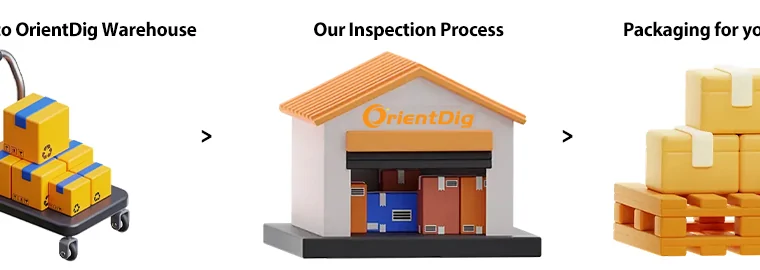
The inspection article is specific. On arrival, staff look at colour, large areas of damage, stains, size, model and version number. Slight colour differences and small discrepancies in actual size are stated as outside the scope. Electronics and digital items are appearance only, with no power on test and no count of accessories, though the photos are sent for you to confirm (checked 4 August 2026).
Read that as a boundary rather than a complaint. It tells you which questions have to be settled before you order, and which ones the photos can still answer. It also explains why the operator says that where something cannot be verified, the assumption is that you and the seller agreed on it.
One line in that article is worth remembering for a haul: if goods arrive in a state unsuitable for shipping, the order is marked so you can negotiate a return rather than paying freight on something that will not travel.
What each side of the trip actually costs you
Costs land in three separate places, at three separate times. Mixing them up is what makes a haul feel more expensive than it was budgeted for.
| When | What you pay for | Who sets it | What moves it |
|---|---|---|---|
| At the order | The item, plus the seller delivery to the warehouse | The seller | Your choice of listing. Wholesale sites often force a minimum quantity. |
| At submission | A deposit on international freight, plus any packing add-ons you ticked | The route and the operator | Total weight, volume, destination, and the extras you asked for. |
| After dispatch | The difference between the deposit and the confirmed freight | The courier scale | The size and weight the courier measures. Overpayment returns to your balance. |
| At the border | Duty or tax, if it lands | Your country | Declared value, weight, piece count and inspection luck. The recipient carries this. |
Structure taken from the OrientDig service charge article, the tutorial steps three and seven, and the customs risk article (checked 4 August 2026). Amounts are deliberately not repeated here because they move.
Questions people ask before their first haul
Longer answers, and the ones about parcels specifically, live on the help page.
Is OrientDig a shop?
No. It buys from other people's shops on your behalf. The listing you choose, the seller you buy from and the price all belong to the marketplace, not to the agent.
Does the agent charge a service fee?
Its own article says the shopping agent service is free and that orders from common platforms carry no handling fee, with optional value added services available on top. Check the figures in your account at submission time rather than trusting any number written on a guide, including this one (checked 4 August 2026).
Can I ask for the item to be tested?
The inspection scope says appearance only for electronics, with no power on test. If a working confirmation is essential, that expectation has to be settled with the seller before you order.
Who is responsible if customs takes the parcel?
The operator states that the recipient carries customs related risks including returns, fines and taxes, and that goods judged to be counterfeit or sensitive are the recipient's responsibility if confiscated. That is standard across agents, and it is the reason the declaration choice deserves a minute of thought.
How to judge an agent, using what it publishes about itself
Choosing an agent is mostly reading. An operator describes its own remit on its home page, and the useful question is not whether that description sounds good but what it leaves out. A trustworthy agent is specific about the things it will not answer for: which goods it refuses, what its inspection does not cover, how long it will hold a parcel, and who carries the loss when a line confiscates something.
Four checks are worth doing before money moves. Can you find a company name and a registration behind the brand? Are the storage terms written down as a number of days rather than implied? Does the fee page name every charge, including the handling fee per parcel and the conversion applied to your top up? Is there a written procedure for a claim, or only a contact button?
Trusting an agent is not a one-time decision either. The terms that matter here are the ones that change quietly, so the honest answer is to re-read the storage and fee pages before a large order rather than after one.